
Table of Contents
China’s 2026 Golden Week is shaping up to be one of the most important travel periods of the year.
But the story is more complicated than simply saying Chinese tourism is booming.
Millions of Chinese travelers are taking advantage of an unusually long holiday period to travel farther, stay longer and visit more international destinations. Long-haul trips to Europe, Australia, New Zealand and other markets are attracting strong demand, while multi-destination itineraries are also becoming more popular.
China’s Golden Week Is Sending a Complicated Message to the Global Tourism Industry
At the same time, travelers are becoming more careful about how much they spend.

That combination creates a fascinating picture of the global tourism economy:
More travel does not necessarily mean more spending per traveler.
China’s Golden Week is therefore revealing a shift that could influence airlines, hotels, tour operators, airports and destinations around the world.
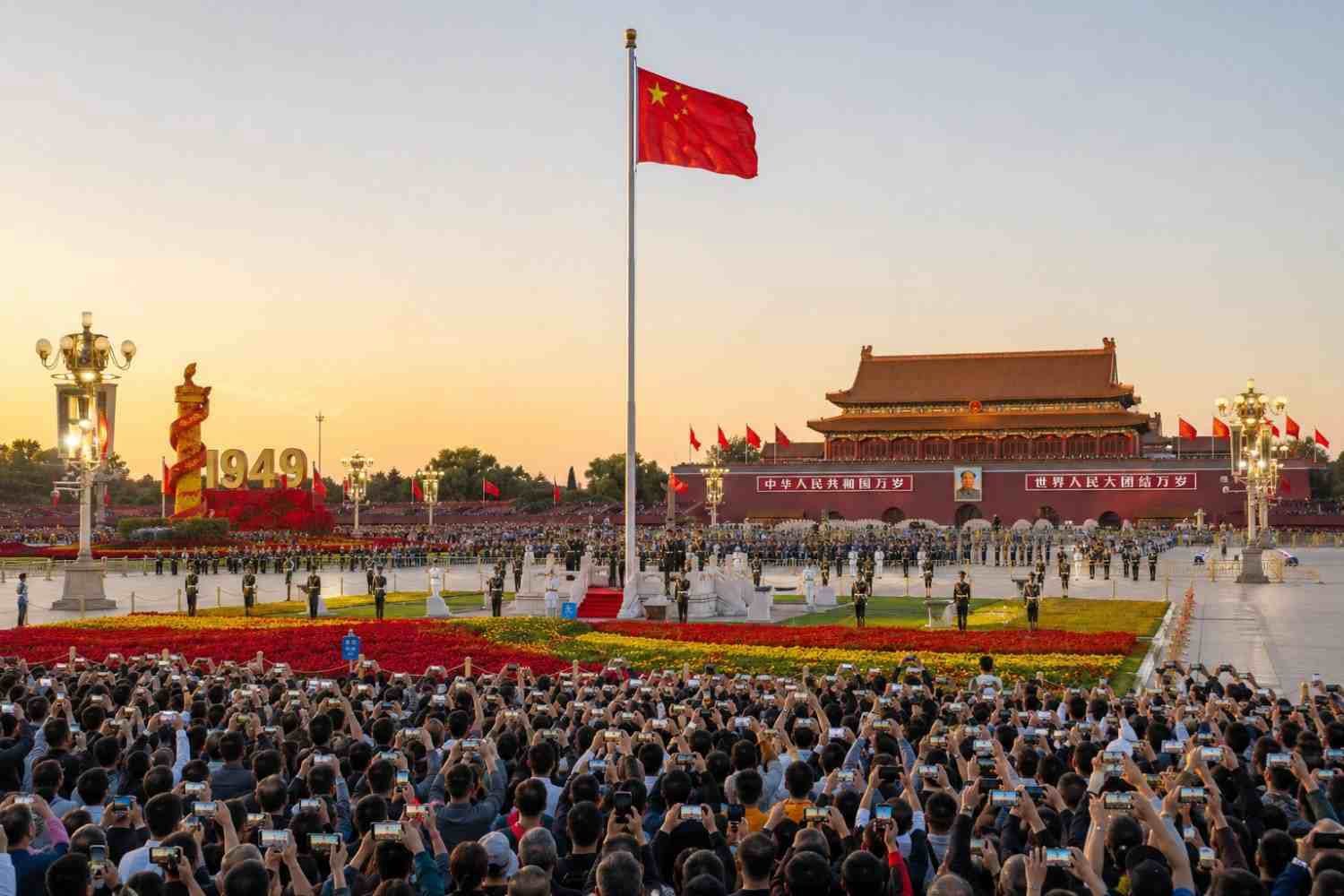
What Is China’s Golden Week?
Golden Week is China’s annual National Day holiday period, beginning on October 1.
In 2026, the timing is unusual because the National Day holiday follows the Mid-Autumn Festival, which fell on September 25–27.
By taking three additional working days off, some travelers can combine the two holiday periods into a break of up to 13 days, creating significantly more time for domestic and international travel.
That additional time changes the economics of travel.
A traveler who normally has only seven days may be restricted to destinations within a relatively short flight.
A 13-day break makes longer journeys more practical.
It allows travelers to visit multiple countries, stay in destinations for longer and build more complicated itineraries.
That is exactly what travel companies are seeing.

Chinese Travelers Are Going Farther
One of the biggest changes this year is the strength of long-haul travel.
According to Trip.com Group data, average outbound trip duration during the extended 2026 holiday period is expected to exceed nine days.
Bookings for hotel stays of at least seven nights were up 123% year over year, while multi-destination itinerary bookings increased 84%.
Travel agencies are also reporting strong demand for destinations far beyond China’s traditional short-haul markets.
Long-haul packages involving:
- Spain
- Portugal
- Greece
- Northern Europe
- Australia
- New Zealand
- Central Asia
- The Caucasus
have attracted strong demand. Reuters reported that some long-haul packages had sold out weeks before the holiday period.
This matters to the global tourism industry because Chinese travelers are not simply returning to familiar destinations.
They are spreading their travel spending across a wider geographic area.
Europe Is Benefiting From Longer Chinese Trips
Europe stands to benefit from the longer holiday window.
When travelers have more time, destinations that would normally be difficult to visit during a short holiday become more accessible.
A nine- or ten-day itinerary can include multiple European cities rather than one destination.
That creates opportunities for:
- Airlines
- Hotels
- Rail operators
- Tour companies
- Restaurants
- Attractions
- Shopping districts
- Airport operators
The shift toward multi-destination travel is particularly important.
Instead of:
China → Paris → China
a traveler might choose:
China → Paris → Amsterdam → Milan → China
That means one international trip can generate tourism spending across several economies.
Asia Remains a Major Beneficiary
Not every traveler wants a long-haul journey.
Asia remains one of the most important destinations for Chinese tourists because of its relatively short travel times and broad range of tourism products.
Trip.com reported strong demand for destinations including Seoul, Jeju, Bali and Phuket.
International flight bookings to Seoul increased 91% year over year on the platform, while bookings to Cebu and Phuket rose 111% and 78%, respectively.
The growth demonstrates how Chinese tourism can benefit destinations at very different price points.
A traveler doesn’t necessarily need to fly to Europe to create international tourism demand.
Short-haul Asian destinations can offer beaches, shopping, food, entertainment and cultural experiences at comparatively accessible prices.
But There Is a Catch: Travelers Are Spending Carefully
This is perhaps the most important part of the Golden Week story.
Travel demand is strong.
But consumer spending remains cautious.
Reuters reported that average spending per trip during the 2025 Golden Week fell to approximately US$135.70, based on government data and Reuters calculations, representing a three-year low.
The implication is significant.
Tourism companies cannot assume that an increase in visitor numbers automatically produces a proportional increase in revenue.
A destination could welcome more tourists while travelers:
- Choose cheaper hotels
- Compare airline prices more carefully
- Reduce shopping
- Choose mid-range restaurants
- Look for discounts
- Stay outside premium districts
- Select experiences based on value
That creates a very different tourism economy from one driven primarily by luxury spending.
The Rise of the Value-Conscious Traveler
The current Chinese travel market appears increasingly focused on value for money.
A survey cited by Reuters found that only 5% of respondents planning overseas travel during the holiday intended to stay in luxury hotels.
Mid-range accommodation was the most popular choice, accounting for 33% of preferences.
That does not mean Chinese travelers are abandoning premium experiences.
Rather, the market appears to be becoming more segmented.
Some consumers will continue to spend heavily on luxury travel.
Others may prioritize the number of destinations they can visit, the length of their trip or the experiences they can purchase.
For hotels, that distinction matters enormously.
A hotel may see occupancy rise without experiencing the same increase in revenue if travelers trade down into cheaper rooms.
Why More Tourists Don’t Automatically Mean More Profit
Consider two hypothetical scenarios.
Scenario A
A destination receives:
100,000 visitors
Average spending:
US$1,000
Total tourism spending:
US$100 million
Scenario B
The destination receives:
130,000 visitors
But average spending falls to:
US$750
Total tourism spending:
US$97.5 million
Visitor numbers increased by 30%.
Tourism spending actually decreased.
That is the challenge facing destinations that rely heavily on visitor volume.
The headline number — arrivals — can look excellent while the underlying economics remain much weaker.
This is why Chinese Golden Week provides such an interesting signal for the global tourism industry.
China’s Government Is Trying to Encourage More Spending
Chinese authorities are aware of the importance of tourism to domestic consumption.
The Ministry of Culture and Tourism launched a nationwide campaign on September 22 designed to encourage tourism and cultural spending during the holiday period.
Local governments are planning more than 20,000 cultural and tourism events and distributing more than US$45 million equivalent in consumer vouchers and subsidies.
The objective is broader than simply increasing the number of people traveling.
The government wants tourism to generate spending across a wider range of service industries.
That includes:
- Hotels
- Restaurants
- Entertainment
- Cultural attractions
- Sports
- Retail
- Transportation
Tourism increasingly functions as a gateway into the wider services economy.
Domestic Tourism Is Still Enormous
International travel receives much of the attention, but China’s domestic tourism market remains enormous.
During the 2025 combined Mid-Autumn Festival and National Day holiday period, Chinese travelers made approximately 888 million domestic trips and spent about 809 billion yuan, according to China’s Ministry of Culture and Tourism.
Using the exchange rate cited in the Reuters report, that spending would be roughly US$120 billion.
The scale demonstrates why China’s tourism market matters even when international travel fluctuates.
The country’s tourism industry has two enormous components:
Domestic tourism
and
Outbound tourism.
Changes in either market can influence airlines, hotels, transportation companies and travel platforms throughout Asia and beyond.
Beijing Shows What Tourism Spending Can Look Like
Early holiday data also shows that spending can remain strong in specific destinations and categories.
During the three-day Mid-Autumn Festival holiday, Beijing recorded 8.783 million tourist visits and approximately 11.54 billion yuan in tourism spending, according to the Beijing Municipal Bureau of Culture and Tourism.
That works out to roughly US$1.7 billion using the exchange rate cited by Reuters for the broader Golden Week story.
Beijing’s tourism economy benefited from attractions, cultural events, performances, food and suburban travel.
This illustrates an important trend:
Tourism is increasingly about the entire experience economy, rather than simply hotel nights and sightseeing.
Experiences Are Becoming More Important
Chinese travelers are increasingly looking for experiences rather than simply checking famous destinations off a list.
According to Xinhua reporting, bookings for glacier hiking on Fliggy increased 50%, skydiving bookings rose nearly 80%, and whale-watching bookings increased 200% for the upcoming holiday period.
That points toward an important evolution in tourism.
Travelers are increasingly asking:
“What can I do there?”
rather than simply:
“Where can I go?”
That benefits destinations capable of offering distinctive experiences.
Nature tourism, adventure tourism, food tourism, cultural tourism and event tourism can all capture spending from travelers who want something more memorable than conventional sightseeing.
Multi-Destination Travel Could Reshape Airline Demand
Longer holidays also have implications for aviation.
A traveler staying away for nine or ten days has more flexibility than someone taking a three-day trip.
This can encourage:
- Longer international routes
- Multi-city itineraries
- Open-jaw flights
- Regional connecting flights
- More hotel nights
- Cross-border rail journeys
Trip.com reported that more than half of outbound flight bookings were scheduled before October 1, as travelers sought to avoid peak congestion and take advantage of the extended holiday.
That behavior could influence how airlines schedule capacity around future Chinese holiday periods.
Hotels Face a More Complicated Market
Hotels may be among the biggest beneficiaries of increased travel volume, but the shift toward value-conscious consumers creates challenges.
The data suggests that travelers are willing to spend more time abroad without necessarily choosing the most expensive accommodation.
That creates a competitive environment where hotels may need to offer:
- Flexible packages
- Discounts
- Family deals
- Longer-stay rates
- Experiences
- Breakfast packages
- Local tours
- Convenient transportation
A luxury hotel cannot assume that simply attracting Chinese travelers will guarantee premium spending.
The product has to justify the price.
What This Means for Global Tourism Businesses
The Golden Week data points toward several broader trends.
1. Tourism demand remains resilient
People continue to prioritize travel even when household budgets are under pressure.
That is an important signal for the global tourism industry.
2. Value matters more
Consumers appear willing to travel while becoming more selective about where their money goes.
3. Longer trips can create wider economic benefits
Longer vacations distribute spending across more destinations and more businesses.
4. Experience is becoming a product
Adventure, culture, food and entertainment can be as important as the destination itself.
5. Luxury is not disappearing
But luxury represents one segment of a much more diverse travel market.
6. Chinese tourists remain globally important
Changes in Chinese outbound travel can affect markets across Asia, Europe, Oceania and North America.
The Global Tourism Economy Is Becoming More Value-Driven
Perhaps the biggest lesson from China’s Golden Week is that the tourism recovery cannot be measured simply through passenger numbers.
The more useful question is:
How much does each traveler spend, and where does that spending go?
A tourist who books a budget hotel, takes public transportation and eats at inexpensive restaurants still contributes to the tourism economy.
But the economic impact differs considerably from a traveler who books a luxury hotel, premium flights, high-end restaurants and expensive shopping experiences.
This distinction matters for investors, hotel operators, airlines and governments.
Visitor numbers are only one part of the equation.
What Destinations Should Learn From Chinese Travelers
The current travel patterns suggest that destinations competing for Chinese visitors may need to rethink their strategies.
Make travel easier
Visa policies, digital payments, transportation and language accessibility can influence destination choices.
Offer value
Competitive pricing is increasingly important.
Build experiences
Unique experiences can differentiate one destination from another.
Promote longer stays
Multi-day packages can increase tourism spending without requiring a proportional increase in visitor numbers.
Connect multiple destinations
Regional tourism partnerships can encourage travelers to visit several cities or countries during one trip.
Understand different traveler segments
Young travelers, families, luxury tourists and budget-conscious travelers do not necessarily want the same products.
What Happens After Golden Week?
The real significance of Golden Week will become clearer once actual spending data becomes available.
The central question is whether the strong travel demand translates into stronger economic activity.
If travelers continue taking longer trips but remain highly price-sensitive, tourism companies may need to adapt to a new normal:
High volume + moderate spending + greater value sensitivity.
That is very different from an environment where tourism growth automatically leads to premium pricing.
For airlines, this could mean strong passenger demand but pressure on yields.
For hotels, it could mean high occupancy but greater competition for room revenue.
For destinations, it could mean more visitors without an equivalent increase in per-capita spending.
And for consumers, it could mean that travel remains a priority even when other forms of discretionary spending are constrained.
Frequently Asked Questions
What is China’s Golden Week?
China’s Golden Week is the National Day holiday period beginning October 1. In 2026, its proximity to the Mid-Autumn Festival allows some workers to create a break of up to 13 days by taking additional leave.
Why is Golden Week important to tourism?
It is one of China’s biggest travel periods and provides an important indication of domestic and outbound travel demand.
Are Chinese tourists traveling farther in 2026?
Yes. Travel agencies and booking platforms report stronger demand for long-haul destinations and multi-destination itineraries.
Are Chinese travelers spending more?
Travel volume is strong, but spending remains more cautious. Reuters reported that average spending per trip during the 2025 Golden Week fell to about US$135.70, a three-year low.
What types of hotels are Chinese travelers choosing?
Mid-range accommodation is currently more popular than luxury accommodation among surveyed outbound travelers. Reuters reported that only 5% planned to stay in luxury hotels, while 33% preferred mid-range hotels.
What destinations are benefiting from Chinese outbound travel?
Asia remains important, while European destinations, Australia and New Zealand are also seeing strong demand for longer trips. Trip.com reported particularly strong booking growth for Seoul, Cebu, Phuket and several European markets.
The Bottom Line
China’s 2026 Golden Week is producing an unusual combination of strong travel demand and cautious consumer spending.
Chinese travelers are going farther.
They are staying longer.
They are visiting multiple destinations.
They are increasingly interested in experiences.
But they are also paying closer attention to value.
That combination could become one of the defining characteristics of the global tourism economy in the years ahead.
The tourism industry has traditionally focused heavily on visitor numbers.
Golden Week suggests that the next phase may require a different measurement:
not simply how many people travel, but how they travel, what they buy and how much economic value each trip creates.
For airlines, hotels, travel platforms and destinations around the world, that distinction could become increasingly important.
China remains one of the world’s most important tourism markets.
But the Chinese traveler of 2026 may be increasingly willing to travel farther while being increasingly unwilling to spend without seeing clear value.
Sources
- Reuters — China’s Golden Week travel surge masks cautious consumer spending
- Trip.com Group — Golden Week 2026 travel trends and destinations
- China Government / Xinhua — Nationwide push to boost holiday tourism spending
- Reuters Connect — China’s 2026 holiday travel and aviation data
That is the real story behind China’s Golden Week travel boom.