
Table of Contents
Morocco airport expansion: Morocco is putting another major piece of financing behind its ambition to become one of Africa’s most important aviation and logistics hubs.
The African Development Bank has signed a €270 million financing agreement with Morocco’s National Airports Office (ONDA) for the Airport Infrastructure Expansion and Modernisation Programme, known as PEMIA.
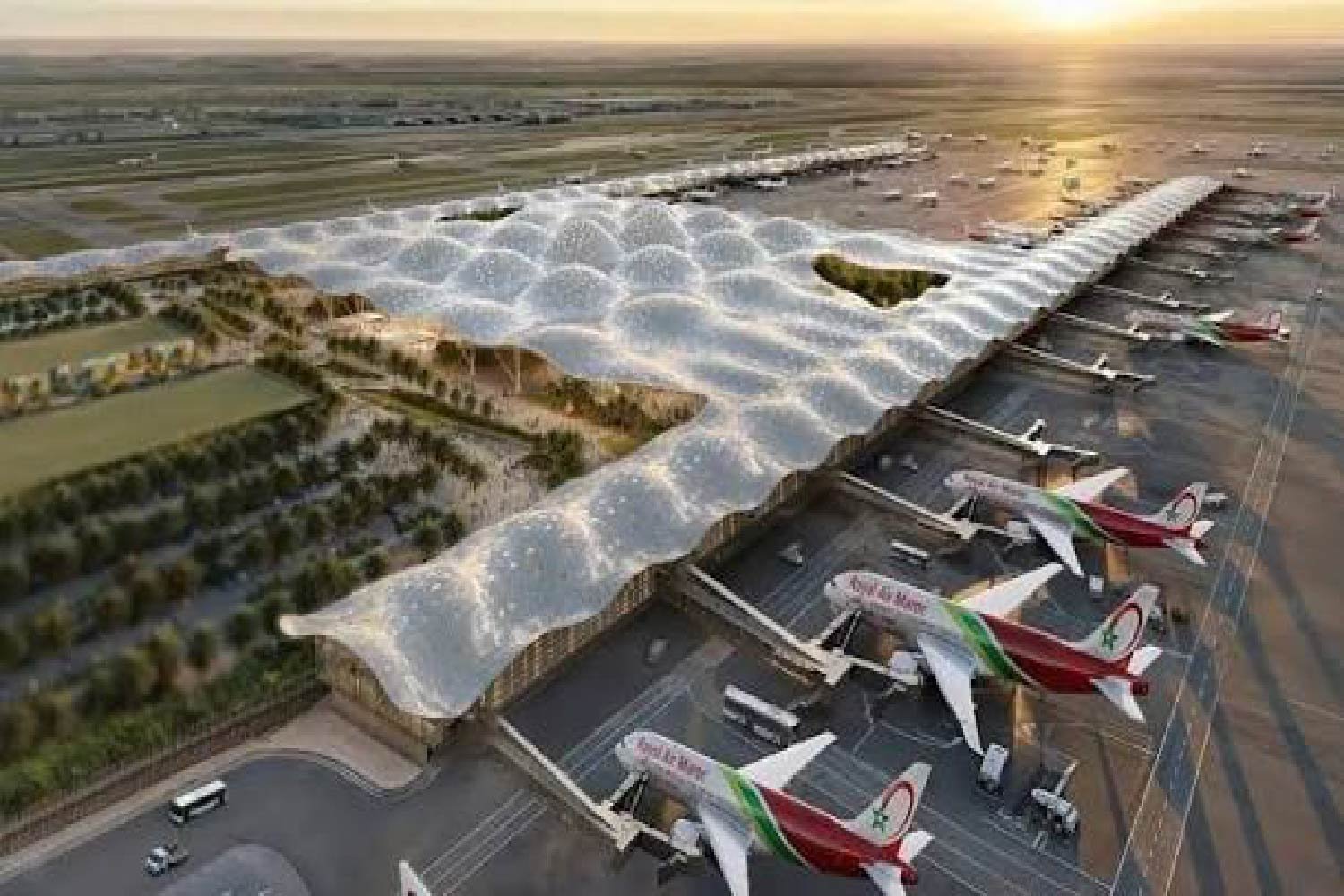
The programme targets four strategic airports — Marrakech, Agadir, Tangier and Fez — with terminal expansion, upgraded airport infrastructure, improved air-navigation systems, stronger security, automated baggage handling and digital passenger services.
The timing is significant. Morocco is preparing for the 2030 FIFA World Cup, while simultaneously pursuing a much broader tourism, aviation and connectivity strategy.

Here are seven reasons the investment matters.
1. Morocco is preparing for a much larger aviation market
The €270 million financing is part of a much bigger transformation.
Morocco’s government and ONDA agreed in 2025 on a MAD 38 billion investment programme for 2025–2030 covering airport expansion, maintenance, modernization and land acquisition.
The country’s stated objective is to raise airport capacity to 80 million passengers annually by 2030.
That means the €270 million AfDB financing should be viewed as one component of a much larger infrastructure cycle rather than a standalone airport project.
The underlying bet is straightforward: Morocco expects passenger demand to keep growing and wants infrastructure capacity to be ready before congestion becomes a constraint.
2. Passenger traffic is already providing evidence for the investment
This expansion is not being built around an entirely hypothetical future.
Moroccan airports handled 22.28 million passengers during the first seven months of 2026, an 8.77% increase compared with the same period in 2025.
International traffic accounted for almost 19.9 million passengers, while international passenger traffic from Europe — Morocco’s largest external market — increased by more than 9%.
Air freight also increased by more than 12% during the period.
That combination matters because airports are not only passenger infrastructure. They are also gateways for tourism, cargo, business travel and international trade.
3. Marrakech, Agadir, Tangier and Fez are strategically important
The four airports covered by PEMIA are not random locations.
Marrakech is one of Morocco’s strongest tourism gateways.
Agadir serves an important tourism and coastal economic centre.
Tangier sits at a strategic crossroads connecting Morocco with Europe and international maritime trade routes.
Fez adds another major tourism and commercial destination to the network.
By 2030, PEMIA targets annual handling capacity of:
- Marrakech: 14 million passengers
- Agadir: 5 million
- Tangier: 3.6 million
- Fez: 3 million
The strategy therefore combines tourism infrastructure with broader regional connectivity.
4. The World Cup is only part of the story
It would be easy to describe the investment as simply a preparation project for the 2030 FIFA World Cup.
That would miss the bigger economic picture.
The World Cup creates a deadline, but Morocco’s airport strategy extends beyond the tournament.
The country’s Airports 2030 programme is designed around rising tourism demand, stronger airline connectivity, growing trade and logistics activity, and Morocco’s ambition to strengthen its position between Africa, Europe and other global markets.
Major sporting events can create temporary demand. Airport infrastructure, however, can remain productive for decades.
The real question is therefore what Morocco can do with the additional capacity after 2030.
5. Better airports can strengthen tourism economics
Tourism is one of the clearest beneficiaries.
More airport capacity can allow airlines to add routes, increase frequencies and serve more passengers during peak periods.
For destinations such as Marrakech and Agadir, that can translate into additional demand for hotels, restaurants, transportation, entertainment, retail and other visitor services.
The effect can extend beyond tourism businesses themselves.
More international visitors create demand across a wider ecosystem of businesses, including logistics companies, payment providers, airlines, travel operators and suppliers.
That makes airport infrastructure an economic multiplier rather than simply a transport expense.
6. Digitalisation is becoming part of the airport investment
The project is not limited to adding physical space.
PEMIA includes modern security systems, automated baggage handling and digital solutions intended to improve the passenger journey.
This is increasingly important as airports compete not only on capacity but also on efficiency.
An airport can have enough terminal space and still struggle if passengers face slow security processing, baggage delays, inefficient check-in systems or inadequate airside infrastructure.
Morocco’s approach therefore combines more capacity with better operational technology.
That could become increasingly important as passenger volumes rise.
7. Morocco is positioning aviation as a regional economic asset
The most important implication may be larger than the four airports receiving upgrades.
Morocco wants its aviation network to support its position as a link between Africa, Europe and the rest of the world.
That has implications for tourism, cargo, investment and business travel.
It also connects with the country’s broader strategy around Royal Air Maroc, logistics infrastructure and international connectivity.
For Africa, Morocco’s investment offers a useful example of how airport infrastructure can be treated as part of a wider economic-development strategy rather than as an isolated public-works project.
The challenge will be execution.
Expanding terminals and runways is only one part of building a successful aviation hub. Morocco will also need airlines, efficient border processes, reliable ground transportation, competitive routes, strong logistics systems and enough demand to make the additional capacity economically productive.

What the €270m investment really signals
Morocco’s airport expansion is ultimately a bet on future connectivity.
The €270 million AfDB financing supports four airports, but the broader Airports 2030 strategy is much larger, with a planned MAD 38 billion investment programme and an objective of reaching 80 million passengers of annual airport capacity by 2030.
Passenger traffic is already growing, tourism remains a major economic priority, and Morocco is preparing to host one of the world’s biggest sporting events.
If the infrastructure is delivered efficiently, the payoff could extend well beyond 2030.
For investors and businesses watching Africa, the bigger signal is clear: transport infrastructure is increasingly becoming a competitive advantage in the race for tourism, trade, logistics and international investment.
Reader Questions
How much is Morocco investing in airport expansion?
The African Development Bank has signed a €270 million financing agreement with Morocco’s National Airports Office for the PEMIA airport expansion and modernization programme. Separately, Morocco’s broader Airports 2030 investment programme covers MAD 38 billion for 2025–2030.
Which Moroccan airports are receiving upgrades under the €270m programme?
PEMIA focuses on Marrakech, Agadir, Tangier and Fez.Life is not a problem to be solved, but a reality to be experienced
What is Morocco’s airport capacity target for 2030?
Morocco aims to raise overall airport capacity to approximately 80 million passengers annually by 2030.
Is the airport expansion only for the 2030 World Cup?
No. The World Cup is an important deadline, but the broader strategy also targets tourism growth, aviation connectivity, trade, logistics and Morocco’s long-term position as a regional hub.
Why does airport infrastructure matter to the wider economy?
Airports connect tourism, trade, logistics, business travel and investment. Greater capacity and more efficient operations can support economic activity well beyond the aviation industry.
Sources
- African Development Bank — “African Development Bank President Secures €270 Million Financing Agreement to Expand Morocco’s Airport Infrastructure” Read the original AfDB announcement
- Morocco Ministry of Economy and Finance — “Signing Ceremony for AfDB Financing for the Airport Infrastructure Expansion and Modernization Programme” Read the original government document
- Maroc.ma — “Moroccan Airports Welcome Over 22 Mln Passengers in Seven Months” Read the original passenger-traffic report
- Maroc.ma — “Morocco Aims to Expand Airport Capacity to 80 Mln Passengers by 2030” Read the original Airports 2030 announcement
- ONDA — “Aéroports 2030” Strategy Read the original ONDA strategy document