
Table of Contents
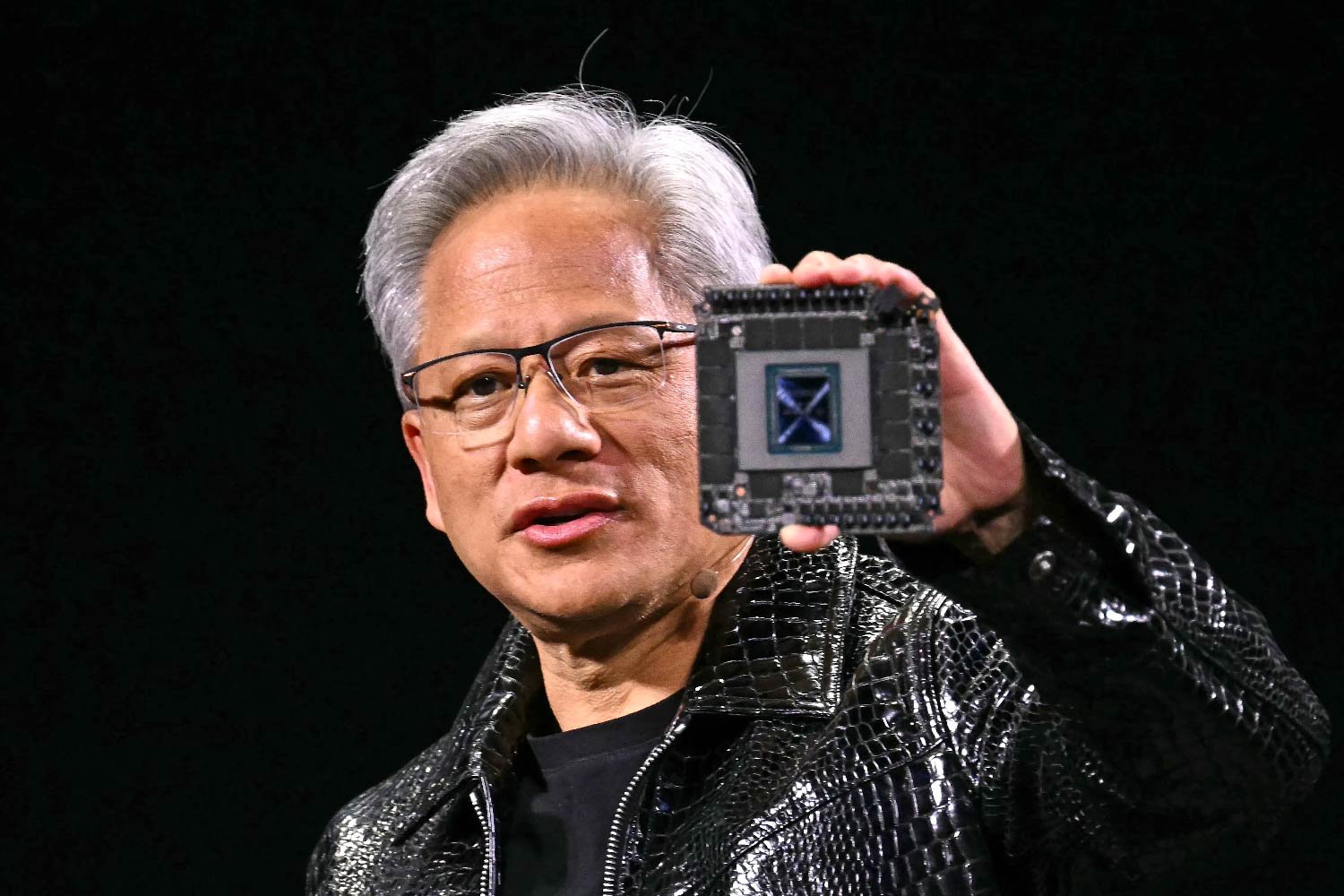
China is considering allowing major technology companies including ByteDance and Alibaba to purchase NVIDIA’s RTX PRO 5500 chips, according to a report by The Information cited by Reuters.
NVIDIA Chips in China: 7 Powerful Facts About the New AI Chip Deal
The development is significant because NVIDIA remains caught between two competing forces: demand from Chinese technology companies for advanced computing hardware and increasingly complex U.S. export restrictions governing the sale of high-performance chips to China.
Reuters reported that China’s Ministry of Industry and Information Technology (MIIT) has asked companies including ByteDance and Alibaba to provide information about how many RTX PRO 5500 chips they want to purchase and how they would use them. The ministry has indicated to some companies that it intends to approve the purchases, although Reuters said it could not independently verify the report. Neither Alibaba, ByteDance nor the Chinese government publicly confirmed the reported plans at the time of publication.
The story is important for investors because it sits at the intersection of NVIDIA, artificial intelligence, semiconductors, U.S.-China technology restrictions and China’s growing AI industry.

It also shows how complicated the global AI-chip market has become.
1. China Is Considering Allowing ByteDance and Alibaba to Buy NVIDIA Chips
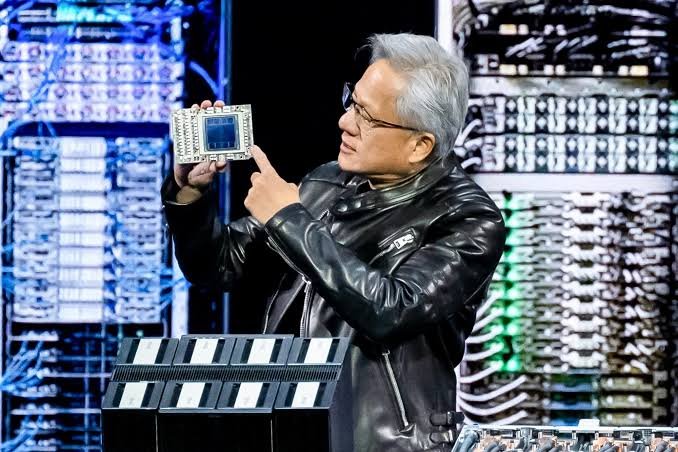
The central development is that Chinese authorities are reportedly considering allowing selected companies to purchase NVIDIA’s RTX PRO 5500 chips.
Reuters, citing The Information, reported that MIIT asked Chinese companies including ByteDance and Alibaba to submit their expected purchase quantities and intended uses for the chips. Some companies were reportedly told that the ministry intended to approve their purchases.
However, there is an important distinction between China considering or intending to approve purchases and completed chip shipments.
As of the latest reporting, this should not be described as a blanket Chinese approval for NVIDIA’s chips.
The reported consideration appears to involve selected companies and specific products.
That distinction is important for anyone following the NVIDIA chips China story.
2. The NVIDIA RTX PRO 5500 Is at the Center of the Story
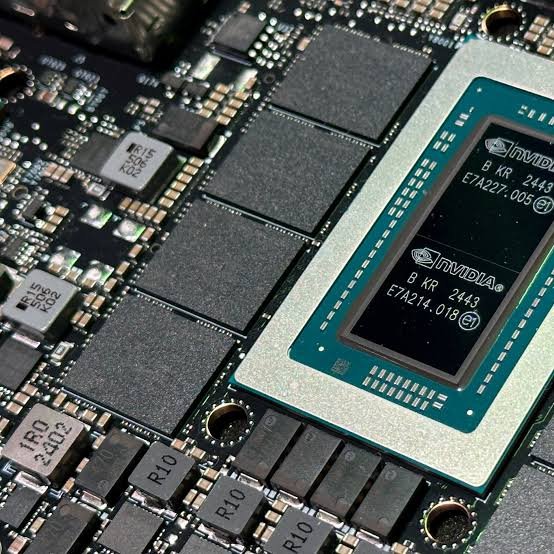
The NVIDIA RTX PRO 5500 is a professional graphics processor designed for demanding computing and visualization workloads.
Its potential availability to Chinese technology companies matters because advanced computing hardware is increasingly important to artificial intelligence development.
AI companies require computing resources for:
- Model training
- Model inference
- AI agents
- Video generation
- Image generation
- Large language models
- Scientific computing
- Simulation
- Data processing
NVIDIA’s position in accelerated computing means its products remain important to the global AI ecosystem.
The company has developed a broad platform encompassing GPUs, networking, software and complete AI-computing systems.
That makes restrictions on NVIDIA products an important part of the wider semiconductor market.
3. Why NVIDIA Chips in China Are So Politically and Economically Important
The NVIDIA chips China issue is larger than a single product.
The United States has imposed export controls designed to restrict China’s access to certain advanced semiconductor technologies.
At the same time, China has been encouraging domestic technology companies to develop and use locally produced alternatives.
That creates a complicated market environment.
NVIDIA wants access to Chinese customers.
Chinese technology companies want access to computing capacity.
The U.S. government wants to control the export of certain advanced technologies.
China wants to strengthen its domestic semiconductor industry while managing access to foreign technology.
These objectives do not always align.
4. NVIDIA Has Already Faced Major China Restrictions
The current RTX PRO 5500 story follows years of restrictions affecting NVIDIA’s business in China.
NVIDIA’s latest regulatory filing describes a complicated licensing environment.
The company said U.S. export controls apply to certain products shipped to China and other restricted destinations based on factors including computing performance, performance density, interconnect bandwidth and memory bandwidth.
NVIDIA also disclosed that U.S. licensing restrictions previously affected its H20 products.
The company said it incurred a $4.5 billion charge in fiscal 2026 associated with H20 inventory and purchase obligations after U.S. export restrictions reduced demand for those products.
The company’s filing also says that beginning in February 2026, the U.S. government granted licenses allowing small amounts of H200 products to be shipped to certain Chinese customers, but Chinese government restrictions limited sales. NVIDIA reported a further $0.4 billion charge associated with H200 excess inventory and purchase obligations during the first half of fiscal 2027.
That history explains why the latest development is attracting attention.
5. China Is Building Its Own AI-Chip Industry
China’s interest in NVIDIA hardware exists alongside a major domestic semiconductor push.
Chinese technology companies and chip designers have been developing alternatives to NVIDIA’s accelerators.
Companies involved in China’s AI-chip ecosystem include:
- Huawei
- Alibaba
- Cambricon
- Biren
- Moore Threads
- Other domestic semiconductor companies
Huawei in particular has expanded its AI-chip ambitions.
Reuters reported earlier this month that Huawei’s AI-chip business had become increasingly significant within China’s domestic AI-chip market, while the company continues developing its Ascend processor family.
This creates an important dynamic.
China may want access to NVIDIA’s technology today while simultaneously developing alternatives for the future.
and restorative getaway.
6. ByteDance and Alibaba Are Major AI Players
The companies reportedly seeking NVIDIA chips are not small startups.
ByteDance operates TikTok and a large portfolio of technology products and services.
Alibaba operates major cloud-computing and technology businesses and has developed its own artificial intelligence models and semiconductor initiatives.
Both companies therefore have substantial reasons to acquire additional AI computing capacity.
More computing resources can support:
- AI model development
- Cloud AI services
- Generative AI applications
- Recommendation systems
- Search
- AI agents
- Video-generation systems
- Enterprise AI
The reported interest in NVIDIA chips therefore reflects the broader competition among Chinese technology companies to expand their AI capabilities.
Why China Needs More AI Computing Power
The global AI race is increasingly a race for computing capacity.
Building a sophisticated AI system requires much more than software engineers.
Companies need access to:
AI accelerators
Specialized processors perform the mathematical calculations required by modern AI models.
Memory
Large AI models require fast access to significant quantities of data.
Networking
Thousands of processors may need to communicate rapidly inside an AI cluster.
Data centers
The hardware needs physical facilities with sufficient power and cooling.
Electricity
AI computing can consume substantial amounts of electricity.
This is why NVIDIA has become such an important company in the AI economy.
Its products sit near the center of this computing infrastructure.
Why U.S. Export Controls Matter to NVIDIA
For NVIDIA, China represents both a major technology market and a complicated regulatory environment.
The company has repeatedly had to modify products to comply with changing U.S. export requirements.
This can create several business challenges.
Product redesign
NVIDIA may need to create versions of its products that fall within applicable export-control thresholds.
Lost sales
If a product cannot legally be sold to a particular market, NVIDIA loses potential revenue.
Inventory risk
Products manufactured for a particular market can become harder to sell if regulations change.
Development costs
Creating alternative products requires engineering and manufacturing resources.
Uncertainty
Customers may delay orders when they are uncertain whether products will ultimately receive regulatory approval.
NVIDIA’s own regulatory disclosures demonstrate that these issues can have material financial consequences.
NVIDIA Chips China: Why the Latest Development Matters for Investors
Investors following NVIDIA need to separate several different questions.
Question 1: Can NVIDIA sell the chips?
That depends on applicable U.S. export controls and licensing requirements.
Question 2: Will China approve purchases?
China can impose its own restrictions on imported technology.
Question 3: Will Chinese companies actually place orders?
Reported government approval does not automatically mean that every company will purchase the maximum quantity available.
Question 4: How large could the market become?
That depends on demand from Chinese technology companies, regulatory policy and competition from domestic chipmakers.
Question 5: Can NVIDIA maintain its technology advantage?
This depends on the performance of NVIDIA products, software ecosystems, supply capacity and the development of competing chips.
These questions make the NVIDIA chips China story more complicated than simply asking whether NVIDIA is allowed to sell a particular GPU.
China Has Previously Limited NVIDIA’s H200 Sales
The current story also needs to be viewed against developments involving NVIDIA’s H200 AI processor.
In July, Reuters reported that China was planning to allow some top AI companies to purchase limited quantities of NVIDIA’s H200 chips, according to The Information.
But NVIDIA later disclosed that sales under the U.S. H200 licensing program remained limited.
The company’s regulatory filing said that Chinese restrictions had prevented it from selling all products for which it had licenses.
That means the regulatory environment can involve two separate approvals:
United States
→ Can NVIDIA legally export the product?
China
→ Can Chinese companies legally purchase and receive the product?
Both sides matter.
The Difference Between U.S. and Chinese Controls
It is useful to understand the two sides separately.
U.S. export controls
The U.S. government can restrict the export of advanced semiconductor technology to China.
These controls can be based on technical characteristics and destination.
Chinese controls
Chinese authorities can separately regulate whether domestic companies purchase particular foreign semiconductor products.
This can affect NVIDIA even when a product technically qualifies for export from the United States.
The result is a two-sided regulatory environment.
NVIDIA may receive U.S. permission to export a product but still encounter restrictions on the Chinese side.
That has already occurred with some H200 shipments, according to NVIDIA’s disclosures.
Could NVIDIA Benefit From More Chinese Sales?
If Chinese technology companies are permitted to purchase additional NVIDIA products and actually place substantial orders, NVIDIA could potentially gain additional revenue from the Chinese market.
However, the financial effect cannot be determined from the latest report alone.
Several variables matter:
- Number of chips approved
- Actual orders
- Pricing
- Product type
- Delivery schedules
- U.S. licensing conditions
- Chinese regulatory decisions
- NVIDIA’s production capacity
- Domestic Chinese competition
The latest report therefore represents a potential market-development story rather than a confirmed revenue forecast.
What Does This Mean for Alibaba?
Alibaba is one of China’s major technology companies and has invested heavily in cloud computing and artificial intelligence.
Its cloud business provides infrastructure and AI services to businesses and developers.
Additional high-performance computing capacity could potentially support its AI operations.
But Alibaba is also developing domestic semiconductor technology.
That means its strategy is not necessarily dependent exclusively on NVIDIA.
The reported interest in NVIDIA chips should therefore be understood within a broader effort to secure sufficient AI computing capacity.
What Does This Mean for ByteDance?
ByteDance operates technology platforms that process enormous amounts of data and use machine-learning systems extensively.
Its AI requirements span areas including:
- Recommendation algorithms
- Content moderation
- Search
- Generative AI
- Video processing
- AI assistants
- Advertising systems
Access to additional computing hardware could support these workloads.
The reported purchase discussions therefore reflect the wider demand for AI computing infrastructure among China’s largest technology companies.
The Bigger Semiconductor Competition
The NVIDIA chips China story is part of a much larger global semiconductor competition.
The United States has sought to maintain restrictions on certain advanced semiconductor technologies.
China has responded by accelerating domestic semiconductor development.
Meanwhile:
- NVIDIA is expanding its AI-computing platform.
- AMD is developing competing AI accelerators.
- Huawei is developing Ascend processors.
- Chinese startups are developing domestic AI chips.
- Cloud providers are developing their own accelerators.
- Semiconductor manufacturers are expanding advanced packaging and memory capacity.
This means the AI-chip market is becoming increasingly competitive.
Why AI Chips Are Different From Ordinary Computer Chips
AI accelerators are optimized for massively parallel mathematical workloads.
Traditional CPUs remain important, but modern AI systems increasingly use specialized processors to accelerate training and inference.
AI workloads can require enormous numbers of operations involving:
- Matrix multiplication
- Neural-network computation
- Tensor operations
- Data movement
The architecture of the processor therefore matters.
So does the surrounding software.
One reason NVIDIA has built a strong position in AI computing is its combination of hardware and software.
Its CUDA ecosystem, libraries, networking technology and complete computing platforms are part of the broader NVIDIA proposition.
This makes replacing NVIDIA hardware more complicated than simply buying another GPU.
NVIDIA’s Software Advantage
A semiconductor company’s competitiveness is not determined solely by silicon.
Developers also need software tools that allow them to build and optimize applications.
NVIDIA has spent years developing its CUDA ecosystem and AI software stack.
This creates switching costs for developers and organizations that have built applications around NVIDIA’s technology.
Chinese chipmakers therefore face the challenge of competing not only with NVIDIA hardware but also with its broader software ecosystem.
That is one reason the development of China’s domestic AI-chip industry is likely to remain a long-term process.
The Role of HBM in AI Chips
Another important component of AI computing is high-bandwidth memory, or HBM.
Modern AI accelerators require very fast access to large quantities of data.
HBM is designed to provide high memory bandwidth while maintaining a relatively compact package.
Companies such as Samsung, SK Hynix and Micron compete in the HBM market.
This means the NVIDIA-China story connects to the wider semiconductor supply chain.
A high-performance AI accelerator requires more than the processor itself.
It also depends on advanced memory, packaging, networking and manufacturing.
NVIDIA Chips China and the Global AI Supply Chain
The AI semiconductor supply chain is increasingly global.
A simplified version looks like this:
AI model companies
↓
Cloud providers
↓
Data centers
↓
NVIDIA / AMD / domestic AI accelerators
↓
HBM memory
↓
Advanced semiconductor manufacturing
↓
Packaging and testing
↓
Electricity and infrastructure
Restrictions at any point in that chain can affect the availability and economics of AI computing.
This is why semiconductor export controls have become such an important economic and technology-policy issue.
What Investors Should Watch Next
For investors following NVIDIA, several developments could provide more clarity.
1. Chinese regulatory approval
Watch for confirmation from Chinese authorities regarding the RTX PRO 5500 purchases.
2. Actual purchase orders
Approval is different from completed orders.
3. U.S. export licenses
The U.S. regulatory environment remains critical.
4. NVIDIA’s China revenue
Future financial reports may provide more information about the commercial significance of the Chinese market.
5. Domestic Chinese chips
Watch Huawei and other Chinese semiconductor companies for improvements in AI-chip performance and availability.
6. AI demand
The amount of computing capacity required by Chinese AI companies will influence demand.
7. Product restrictions
Changes to technical thresholds could alter which NVIDIA products can be exported.
Could China Become More Dependent on Domestic AI Chips?
China’s long-term semiconductor strategy is focused heavily on increasing technological self-sufficiency.
The country has significant incentives to reduce dependence on foreign suppliers for strategically important technologies.
At the same time, developing a complete alternative ecosystem takes time.
It requires:
- Semiconductor design
- Manufacturing
- Advanced packaging
- Memory
- Networking
- Software
- Developer tools
- Cloud integration
- Large-scale deployment
China can therefore simultaneously pursue domestic chip development while allowing selected companies to use foreign processors.
The two approaches are not necessarily mutually exclusive.
What Could Happen to NVIDIA’s China Strategy?
NVIDIA’s China strategy will likely continue adapting to regulatory changes.
The company has already developed products specifically affected by export restrictions.
Its future China business will depend on what products can legally be sold, what Chinese customers are permitted to purchase and how competitive domestic alternatives become.
For NVIDIA, China is therefore not simply a sales opportunity.
It is also a regulatory and strategic challenge.
The Bigger AI Investment Story
For investors, the most important lesson from the NVIDIA chips China development may be that AI investment cannot be separated from geopolitics.
The AI boom depends on semiconductor supply.
Semiconductor supply depends on manufacturing capacity.
Manufacturing depends on international supply chains.
And international supply chains are increasingly affected by national-security policy.
That means AI investors need to watch more than earnings reports.
They also need to understand:
- Export controls
- Semiconductor policy
- AI regulation
- Supply-chain restrictions
- Domestic technology development
- Energy infrastructure
- Cloud-computing demand
The technology industry and geopolitical environment are becoming increasingly interconnected.
Frequently Asked Questions
Is China allowing NVIDIA chips to be sold to Alibaba and ByteDance?
China is reportedly considering allowing ByteDance and Alibaba to purchase NVIDIA RTX PRO 5500 chips. Reuters reported that China’s Ministry of Industry and Information Technology has asked companies about planned purchases and intended uses. Reuters said it could not independently verify the report, and the companies and Chinese government had not publicly confirmed it.
What NVIDIA chips are involved?
The latest report concerns NVIDIA’s RTX PRO 5500 chips. This is separate from earlier reporting concerning NVIDIA’s H200 AI accelerators.
Why does China need NVIDIA chips?
Chinese technology companies require substantial computing capacity for AI development, cloud services, recommendation systems, generative AI and other workloads. NVIDIA is one of the major global suppliers of accelerated computing technology.
Can NVIDIA sell advanced chips to China?
It depends on the specific product, technical specifications, U.S. export-control rules and licensing requirements, as well as Chinese regulatory decisions. NVIDIA’s own filings describe a complex licensing environment affecting its China sales.
Does China have its own AI chips?
Yes. Chinese companies including Huawei and other domestic semiconductor developers are building AI processors designed to reduce reliance on foreign technology. Reuters has reported on Huawei’s growing role in China’s AI-chip ecosystem.
Why is NVIDIA important to AI?
NVIDIA supplies GPUs and a broader software and networking ecosystem used extensively for AI training and inference. Its technology has become an important part of modern AI infrastructure.
What are U.S. semiconductor export controls?
They are rules restricting the export of certain advanced semiconductor technologies and related products to specified destinations and entities. NVIDIA says its China-related restrictions can depend on technical characteristics such as computing performance, performance density, memory bandwidth and interconnect bandwidth.
Does the latest China report guarantee more NVIDIA revenue?
No. Reported consideration or intended approval does not guarantee completed purchases, shipments or a particular level of revenue.
Why does the NVIDIA-China relationship matter to investors?
China is a major technology market, while NVIDIA’s products are subject to changing export restrictions. Changes in China’s purchasing rules, U.S. licensing policy and domestic Chinese competition can therefore affect NVIDIA’s potential market opportunity.
Conclusion
The latest NVIDIA chips China development highlights the increasingly complicated relationship between artificial intelligence, semiconductors and geopolitics.
China is reportedly considering allowing companies including ByteDance and Alibaba to purchase NVIDIA’s RTX PRO 5500 chips. China’s Ministry of Industry and Information Technology has reportedly requested information about intended purchases and uses, although Reuters has not independently verified the report and no formal public confirmation had been issued by the companies or Chinese government at the time of reporting.
The development follows a series of changes affecting NVIDIA’s access to the Chinese market.
NVIDIA’s own regulatory filings show that U.S. export controls have already affected products including its H20 and H200 processors, while Chinese restrictions have also limited some potential H200 sales.
At the same time, China is investing heavily in domestic AI-chip development, with companies such as Huawei developing alternatives to foreign accelerators.
This creates a complex market.
Chinese companies need computing capacity to compete in artificial intelligence.
NVIDIA wants to supply that demand.
The U.S. government restricts certain advanced semiconductor exports.
China controls which foreign technologies its domestic companies can purchase.
And domestic Chinese chipmakers are working to reduce reliance on foreign suppliers.
For investors, the most important thing is to distinguish reported regulatory consideration from confirmed purchases and actual revenue.
The latest story does not establish how many chips will ultimately be purchased, when they might be shipped or how much revenue NVIDIA could generate from the reported transactions.
What it does demonstrate is that the global AI-chip market is increasingly shaped by both technology and policy.
As artificial intelligence continues to expand, access to advanced computing hardware will remain an important issue for NVIDIA, Chinese technology companies, semiconductor manufacturers and investors around the world.
EquityGuyPro will continue tracking NVIDIA, AI semiconductors, China’s technology industry and the global forces shaping the artificial intelligence economy.
Sources & Further Reading
- Reuters — China weighs allowing ByteDance, Alibaba to buy new Nvidia chips, The Information reports
Read the exact Reuters article - The Information — China Weighs Allowing Purchases of New Nvidia Chips by ByteDance, Alibaba
Read the exact The Information article - NVIDIA Investor Relations — NVIDIA 2027 Q2 Form 10-Q
Read the exact NVIDIA filing